 by
by Post-Braces Care · UAE
The Day the Braces Come Off Is Not the Finish Line
Across Dubai, Abu Dhabi, and Sharjah, thousands of teens and adults finish orthodontic treatment every year. The moment those brackets come off feels like the end of the road, but ask any orthodontist in the UAE and they will tell you the same thing: the real work of keeping a straight smile begins on removal day. That work has a name, and it is called retention.
Teeth are not glued into the jaw. They sit in a socket surrounded by ligaments that have memory, and after months of pressure from braces those fibres want to pull the teeth back toward where they started. This is called orthodontic relapse, and it is the single biggest reason people who had perfectly straight teeth at age 18 end up with crooked ones again at 30. A well-planned retainer stage is what stops that from happening.
The good news is that retention in 2025 is easier and more comfortable than it has ever been. Clinics from Jumeirah to Al Ain now offer three main retainer options, and choosing the right one is a conversation you should have with your orthodontist before the braces even come off.
1. Debonding Day: What to Expect at Your Dubai Clinic
The appointment
A calm, one-hour visit, no anaesthetic needed
Most orthodontic practices in Dubai Healthcare City, Al Wasl Road, and along Sheikh Zayed Road follow a similar debonding routine. The orthodontist uses a small plier-like instrument to gently lift each bracket off the enamel. It is not painful, though you will feel pressure and hear a soft click. Once the brackets are off, the leftover bonding cement is polished away with a fine bur and a rubber cup.
After that, most clinics take a full set of records: photos, digital scans, and sometimes an X-ray. These are used to make your retainers and to give you a clean before-and-after comparison. Many patients in the UAE ask for a professional polish or a mild whitening treatment on the same day, because the enamel that was under the brackets can look slightly different in shade for the first few weeks.
2. Why Retainers Matter More in the UAE Climate
The science of relapse is universal, but a few local factors make retention especially important for patients in the Emirates. Long summers mean many families travel abroad for weeks at a time, which is exactly when retainer discipline slips. High-sugar drinks and karak breaks can also encourage plaque build-up around a bonded retainer if care is casual. And the sheer heat of a car cabin parked outside a Mall of the Emirates entrance in July is more than enough to warp a clear plastic retainer left on the dashboard.
According to the American Association of Orthodontistsretainer wear is considered a lifelong commitment for most patients, with only the frequency changing over time. Skipping it is the fastest way to undo years of treatment. If you want a deeper clinical overview of options, this guide to retainers after braces is a useful starting point before your consultation.
The three retainer types you will be offered
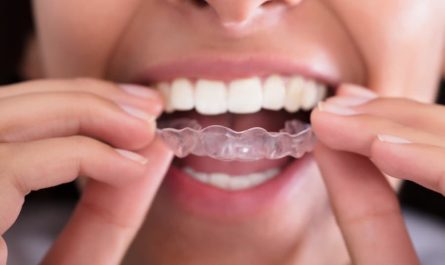
Clear removable
Thin, transparent trays that fit over the teeth. Nearly invisible, popular with adult patients in Business Bay and DIFC who care about aesthetics. Best when the bite is stable and the patient is disciplined about wearing them.
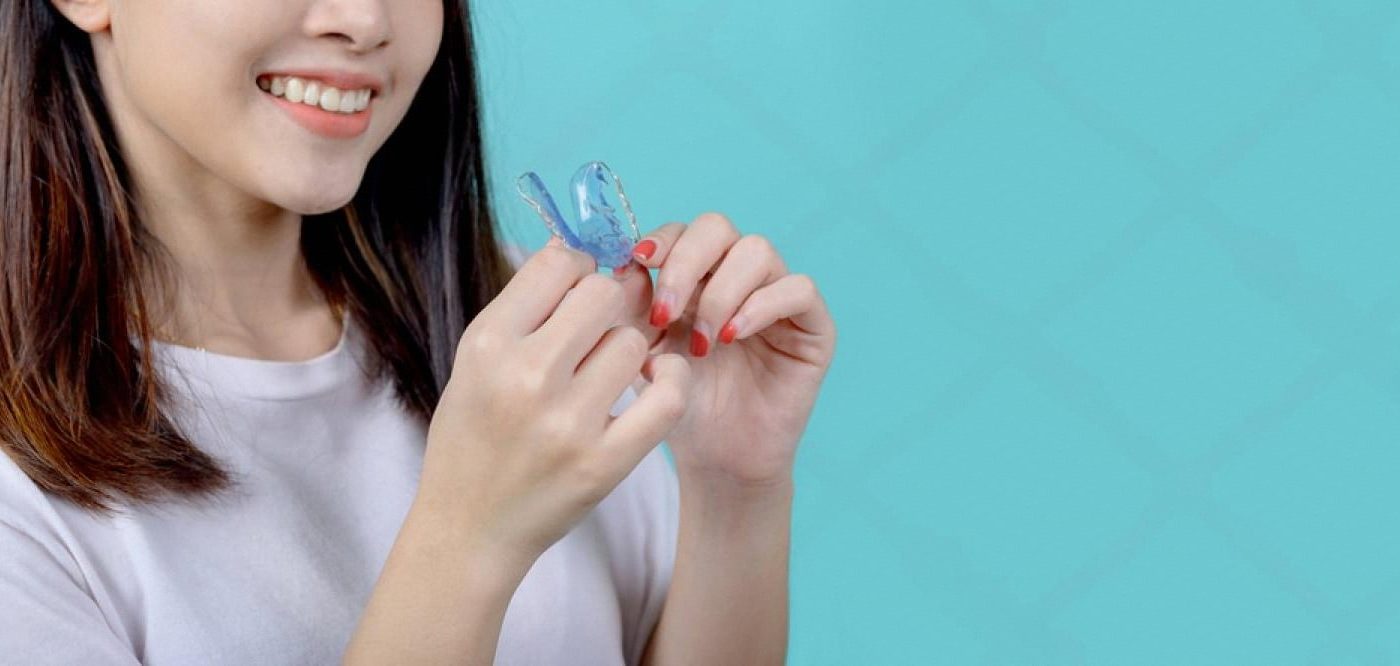
Hawley retainer
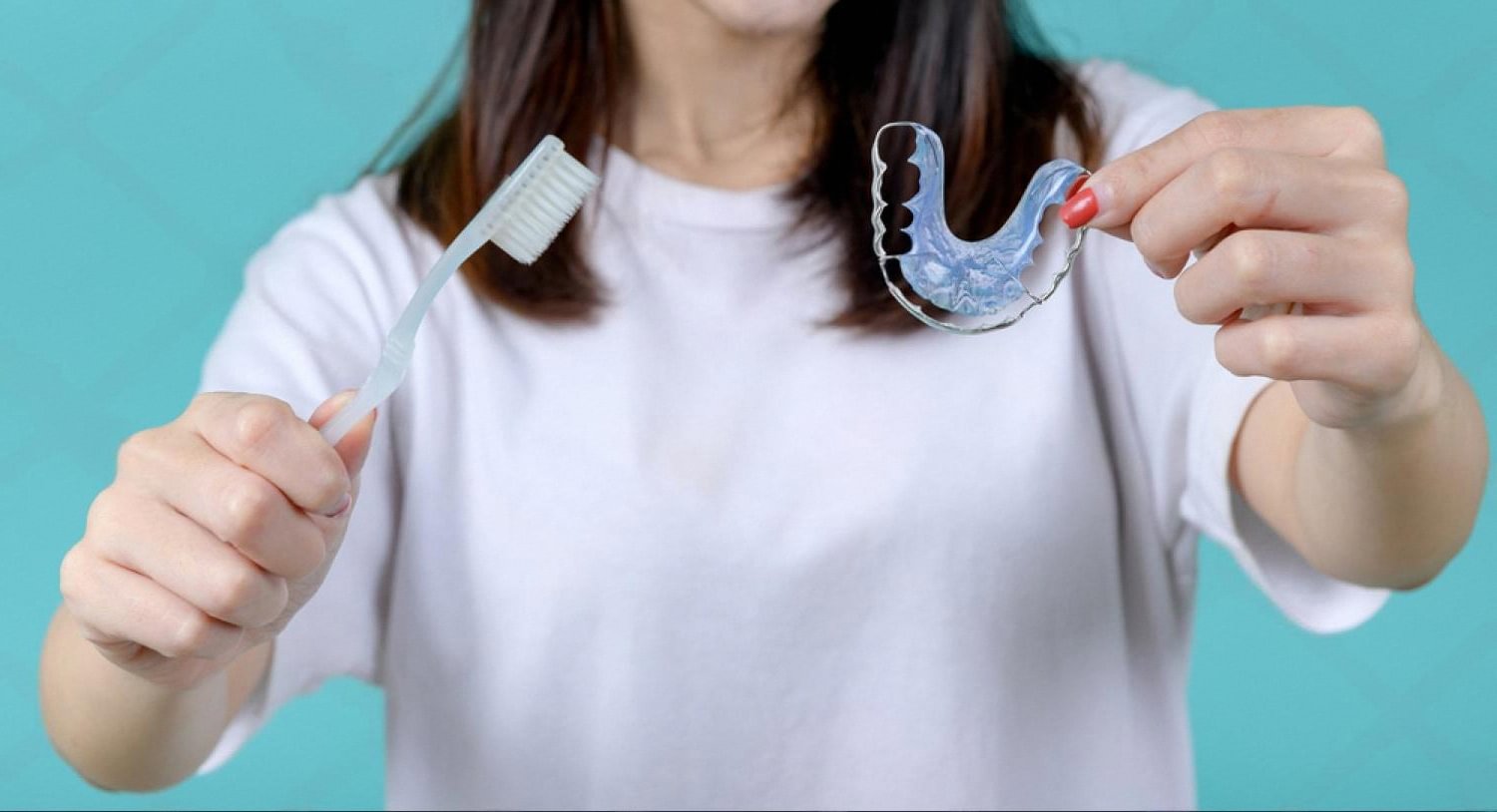
The classic acrylic plate with a thin metal wire across the front teeth. Durable, easy to adjust, and often recommended for teenagers who play sports or grind at night. Lasts many years if handled with care.
Fixed (bonded)
A thin wire glued to the back of the front teeth, invisible from outside. Ideal when the front teeth were severely crowded or rotated before treatment. Requires no memory to wear, but demands extra flossing skill.
Matching type to patient
When each option is recommended
- Clear retainers suit adults who finished with Invisalign or clear aligners, since the appliance style matches what they are used to.
- Hawley retainers are often chosen for growing children because the acrylic plate can be adjusted as the palate matures.
- Fixed retainers are common on the lower front teeth, which are the most prone to relapse in the whole mouth.
- Combinations are increasingly popular: a bonded wire on the lower arch plus a clear tray on the upper, for example.
3. Caring for Your Retainer in Everyday UAE Life
A retainer is a small piece of dental equipment that lives in a warm, wet mouth every day. Without care, it turns cloudy, smells, and can even crack. The habits below are what UAE orthodontists repeat at every follow-up visit, and they are worth building into your routine from week one.
- Clean it daily. Brush gently with a soft toothbrush and cool water. Skip toothpaste on clear trays: it scratches the plastic. Use a retainer cleaner tablet once or twice a week.
- Always store it in its case. Never wrap it in a tissue or napkin at a restaurant. Tissue-wrapped retainers are the number one item accidentally binned at food courts in UAE malls.
- Keep it away from heat. Do not leave it in a hot car, near a stove, or in direct sunlight on a balcony. Plastic retainers warp above 60°C, and a parked car in Dubai summer easily exceeds that.
- Do not rinse with hot water. Cool or lukewarm only. Boiling water will not sterilise it, it will only ruin it.
- Bring it to every check-up. Your orthodontist will inspect the fit, spot early wear, and clean it professionally. Most UAE clinics recommend a review every six to twelve months.
- Keep it out of reach of pets. Dogs love the taste of saliva-soaked plastic. A chewed retainer is one of the most common reasons for an unplanned replacement.
“The patients who keep their smiles into their forties and fifties are not the ones with the best genetics, they are the ones who never stopped wearing their retainer at night.”
How Long Do You Actually Need to Wear It?
The honest answer, and the one most patients do not want to hear, is that retention is for life. The schedule simply gets lighter over time. A typical plan looks like this:
- First 3 to 6 months. Full-time wear, roughly 20 to 22 hours a day. You remove it only for meals and cleaning.
- Months 6 to 12. Nights only, every single night, without exceptions.
- Year two onward. Nights only, three to five times a week, indefinitely.
- Fixed retainers. Can stay in place for a decade or longer, checked yearly for loose spots.
Research summarised on the NHS orthodontics overview confirms that reduced but consistent retainer use, especially at night, is what keeps teeth stable across decades. Skip a few weeks and the trays start to feel tight when you finally wear them again. That tightness is the tooth trying to relapse, and the retainer pulling it back.
The bottom line
Braces build the smile. Retainers keep it.
Whether you finished treatment at a family clinic in Al Barsha, a specialist practice in Abu Dhabi Corniche, or an aligner studio in Sharjah, the rule is the same. Wear the retainer, clean it daily, protect it from heat, and bring it to your reviews. Do that, and the smile you worked eighteen months for will still be with you in eighteen years.
Frequently asked questions
Does removing braces hurt?
No, debonding is not painful. You will feel firm pressure and hear small clicks as each bracket is lifted off, but no anaesthetic is needed. Some patients feel mild tooth sensitivity for a day or two afterwards, which settles quickly with normal brushing.
Which retainer type is best for adults in the UAE?
Most adults prefer clear removable retainers because they are almost invisible and comfortable to wear at work or in social settings. However, if your lower front teeth were badly crowded before treatment, your orthodontist may add a bonded wire behind them for extra security. A combination of the two is very common in Dubai and Abu Dhabi clinics.
What happens if I stop wearing my retainer?
Teeth begin shifting within days. In the first few weeks the retainer will simply feel tight when you try to put it back in. After a few months, it may no longer fit at all, and you will need new impressions and a new retainer, or in serious cases a short round of aligners to reset the teeth.
Can I drink hot karak or coffee with my retainer in?
No. Hot drinks can warp clear plastic retainers and stain them. Always remove a clear or Hawley retainer before drinking anything other than cool water, and rinse your mouth before putting it back in. Fixed bonded retainers are not affected by hot drinks, since they are made of metal wire and dental composite.
How often should I replace my retainer?
Clear plastic retainers typically last one to three years with careful use. Hawley retainers can last five to ten years or more. Fixed retainers can stay in place for a decade if the bond holds. Your orthodontist will check them at your follow-up visits and let you know when a replacement is due.
My retainer feels tight after a holiday abroad, is that normal?
Yes, and it is a warning sign. Tightness means your teeth have started to shift back. Wear the retainer full-time for a few days until it feels comfortable again, then return to your normal night-time schedule. If it still does not seat properly after a week, book a check-up with your orthodontist.
Are fixed retainers difficult to clean?
They take a little practice. You will need to use floss threaders or a water flosser to clean under the wire, since regular flossing between the front teeth is blocked. Most UAE clinics will show you the technique on the day the retainer is fitted, and hygienists will check it at every dental cleaning.